Women Domestic Workers
Advancing Dignity and Skills
in the Care Economy.
Volunteer and opportunities pages are ready
Find the latest ways to contribute your time, skills, and support to Prayaas.
Recognizing the Invisible Work: Women Domestic Workers and Unpaid Care Work
Across India, millions of women shoulder the dual burden of unpaid care work and paid domestic labour. They cook, clean, care for children, the elderly, and the sick — holding families and communities together through both physical and emotional labour. Yet, their immense contribution remains largely invisible, undervalued, and unrecognized as meaningful work.
Domestic work is one of the largest informal sectors in India, employing millions of women from marginalized communities. Despite sustaining the daily lives of countless households, these women remain excluded from fair wages, secure employment, and the basic dignity of being acknowledged as workers.
The Invisibility of Care
Globally, over 75 million people are engaged in domestic work (ILO, 2023), and nearly 80% are women. In India, estimates suggest close to 50 million domestic workers, but the absence of reliable data conceals the real scale of their contribution.
In West Bengal, thousands of women from low-income households work as domestic workers in urban homes. However, inadequate data and weak policy recognition make their struggles invisible. Domestic work continues to be seen as an “extension” of women’s unpaid household duties rather than as skilled, valuable labour. This lack of recognition not only limits their visibility in society but also undermines their sense of self-worth.
Legal and Policy Landscape
Despite their vital contribution, domestic workers in India remain largely outside formal labour protection. There is still no comprehensive national law ensuring fair pay, safe working conditions, or social security for them. A few states have limited welfare provisions, but the majority continue to work in highly informal and precarious settings.
At the international level, the ILO Convention 189 on “Decent Work for Domestic Workers” sets clear global standards — including fair pay, rest days, written terms of employment, and protection from abuse. India has yet to ratify this convention, but it provides a strong framework for future policy reforms.
In a landmark step, the Supreme Court of India, in January 2025, directed the government to create a legal framework ensuring fair wages and decent work conditions for domestic workers (Ajay Malik vs. State of Uttarakhand). This marks a moment of hope and recognition for millions of women whose labour has long been invisible.
What We See and Experience
Through our ongoing community profiling and engagement, Prayaas has identified the everyday realities of women domestic workers:
- Discrimination: Persistent inequalities based on caste, class, and gender.
- Precarious working Conditions: Low and irregular wages, long working hours, lack of basic facilities and no paid leave.
- Workplace Exploitation: Sudden job loss, non-payment, and false accusations such as theft.
- Gender-Based Violence: High incidence of domestic, emotional, and workplace violence.
- Limited Awareness and Access: Many women are unaware of welfare schemes and entitlements or face procedural barriers in accessing them.
These experiences reveal not only structural injustice but also the undervaluing of women’s labour — both within homes and outside them.
Our Work: Building Dignity and Recognition
At Prayaas, we believe that the fight for recognition of unpaid care work and the dignity of paid domestic work must go hand in hand. Our approach focuses on helping women domestic workers understand their self-worth as workers and the importance of dignified working conditions — including fair pay, rest, respect, and security at work.
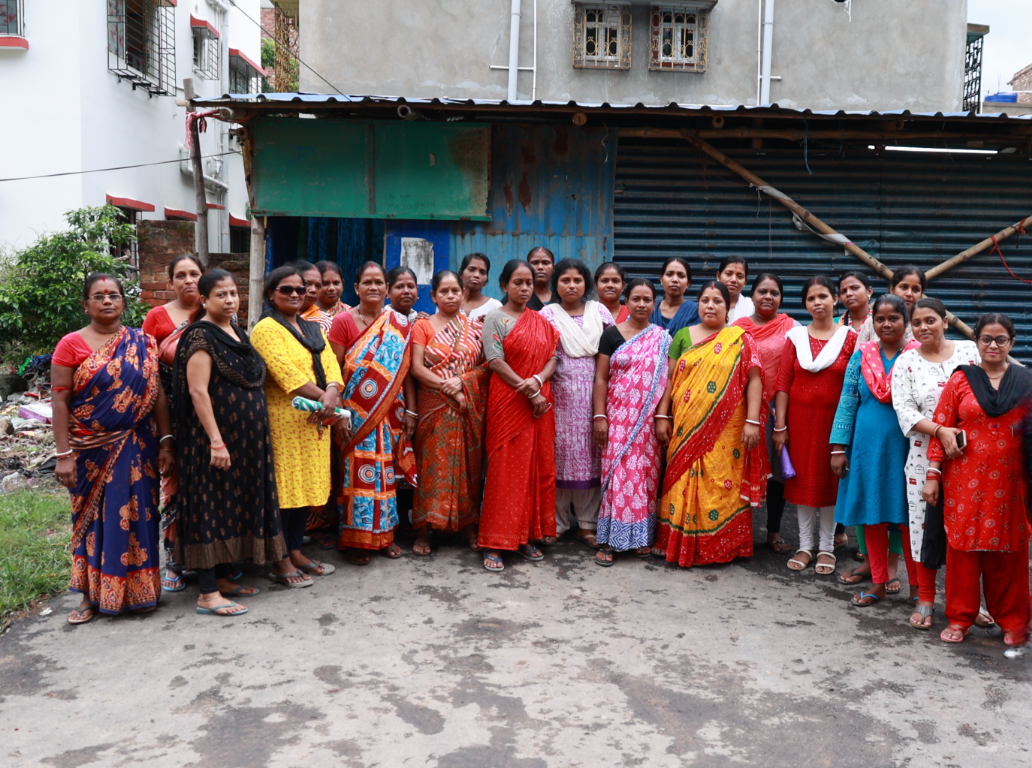
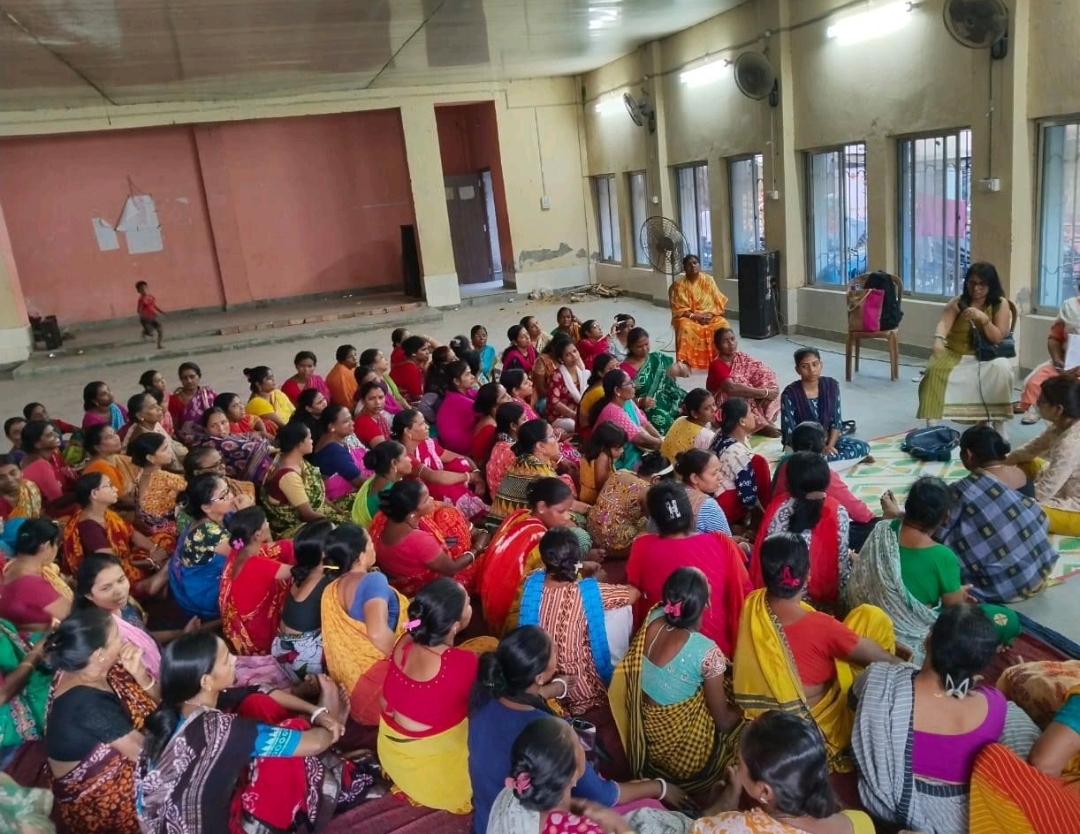
We currently work with 21 community-based groups of women domestic workers across low-income neighbourhoods — collectively known as the Griha Shramik Samadhan Dal — comprising 677 active members. These collectives serve as safe spaces where women come together, share experiences, and mobilize for better treatment and recognition.
Empowerment Through Collective Action and Learning
Prayaas supports women domestic workers through an integrated approach focused on dignity, awareness, and opportunity:
- Awareness and Education: Helping women understand the value of their work and the components of dignified working conditions.
- Collective Mobilization: Strengthening women’s groups so they can advocate together for fair treatment and workplace dignity.
- Access to Entitlements: Between 2024–2025, 220 women have been successfully linked to various government schemes and welfare benefits.
- Digital Literacy: Smartphone usage among collective members has increased from 33% to 70% through our Digital Literacy Programme. Earlier, most women used phones only for entertainment; now, they use them to save contacts, record messages, engage on WhatsApp, and seek help when needed — gaining new confidence in digital communication.
- Skill Development: 50 women have been connected to vocational training opportunities, and 40 of them have reported improved incomes.
Towards a Future of Dignity and Hope
For generations, women domestic workers have powered homes and societies, often without acknowledgment or respect. At Prayaas, we are committed to changing this reality — by helping women find their voice, build collective strength, and claim their place as valued contributors to our social and economic life.
We envision a future where every domestic worker is seen, respected, and treated with dignity — where her labour is recognized as essential, her work environment is safe, and her contribution is celebrated.
Because when we recognize and value care work, we take a step towards a more just, equal, and humane world.
History of Parichiti Working on Women Domestic Workers
Here is the timeline of the history of Parichiti, Working on WDW:
2000
- October: Registered as Society (Parichiti of Kolkata)
- Working for domestic workers (WDW) right as volunteer service
- Rescuing a survivor of workplace harassment
- Legal intervention – Murder of WDW at workplace
2004
- Funding by Global Fund for Women to work for domestic workers rights
- Field exposure
- Relationship building with domestic workers at 03 railway stations
2007
- Funding by Shapla Neer: Citizen’s committee in Japan for overseas support.
- Research study about domestic workers
- Introduced ‘Bishram Ghar’ rest room for WDWs during working hours.
- Formation of ‘Samadhan Dal’ – WDW collective for addressing the issues of DWs.
- 04 domestic workers community group formed
2010
- Support received from Child Rights and You [CRY]
- Working on Right of Children to Free and Compulsory Education Act, 2009 with 07 schools in 02 districts of West Bengal focusing the daughters of domestic workers.
- Working with the School Education Department and School teachers to resist school dropout and early marriage.
2011
- Funding received from Dorabji Tata Trust
- Intervention on better working conditions of domestic workers
- Field intervention stated, community group
- Managed 08 domestic workers community groups
2012
- Funding by South Asian Women’s Fund to work with domestic workers.
- Regular intervention at 12 communities.
2017
- Parichiti Merged with Centre for Health and Social Justice due to funding crisis and non-existing FCRA registration.
- Started the project ‘Partnering for Change’ funded by the United Nation’s Trust Fund on equal sharing of gender roles and societal responsibilities among diverse gender identities especially women and men.
- Started the project ‘Ek Saath’ funded by Oak foundation on Creating a network of responsible men towards the equality of women.
- I started working with elderly women. i.e. retired domestic workers in the slums of Kolkata
2018
- Funding by Global fund for Women to work on domestic workers rights.
- Regular intervention at 16 communities.
2021
- Funded by Azim Premji Philanthropic Initiative for the Project Nirnay, on empowerment of women against GBV and providing comprehensive support through a responsible support system.
- Started Crisis Support Centre- One window comprehensive support centre for survivors Warning:
- Started 24X7 active helpline for survivors seeking support
- Worked in 25 communities of Kolkata and South 24 Parganas including 20 WDW communities consisting of 530 members, 20 men’s groups of 250 members, 03 adolescent girls groups of 75 members.
2022
- Selected in GROW 100 and Received GROW fund by Edelgive Foundation on Organisational Development.
- Received funding from Global Fund for Women on domestic workers rights.
2023
- Received funding from Rohini Nilekani Philanthropy to work with young men and boys at school-college and communities, on self-efficacy active citizenship and gender championship.
2024
- Funding support of APF ended
- Ended up ties with Centre for Health and Social Justice
- PRAYAAS Trust registered in 2011 started working independently with a personal consultancy received by Managing trustee Kakuli Deb by the Global Fund for Women.
Support Our Mission
Your contribution empowers marginalized women and helps build a just society free from violence and discrimination. Every rupee makes a difference.
Trustee Section
Our Trustees
Meet the trustees helping guide Prayaas, with available portraits shown here and additional ones ready to be added over time.
Our Team
Meet the core team members driving programmes, field engagement, operations, and volunteer support across Prayaas.
Make a Difference: Volunteer with Prayaas
Join Prayaas and be a part of meaningful social transformation. Your time, skills, and passion can uplift communities and empower women and girls across West Bengal.
Whether it’s assisting with programs, event planning, fundraising, or fieldwork, your contribution helps build a brighter, more equitable future. Explore the variety of volunteer opportunities available and find the perfect fit for you.